NFT vs Cryptocurrency Explained for Beginners
Many beginners entering crypto often get confused between:
- NFTs
- Cryptocurrencies
Some people think:
- NFTs are coins
- Bitcoin is an NFT
- NFTs and crypto are exactly the same
But in reality:
NFTs and cryptocurrencies are very different.
Yes, both use blockchain technology…
but their purpose, structure, and use cases are completely different.
In this beginner-friendly guide, we will deeply understand:
- NFT vs cryptocurrency
- key differences
- examples
- ownership
- use cases
- future potential
in very simple language.
What Is Cryptocurrency?
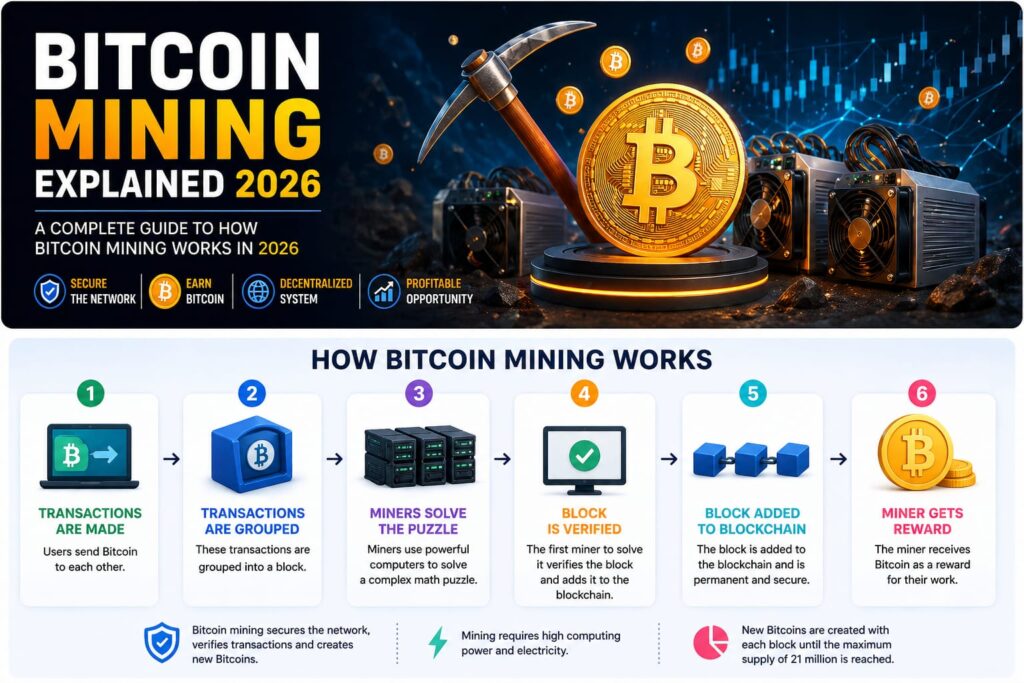
Cryptocurrency is a digital currency built on blockchain technology.
Popular examples:
- Bitcoin
- Ethereum
- Solana
- BNB
Cryptocurrencies are mainly used for:
- payments
- trading
- investing
- transfers
- DeFi
Crypto coins are:
Fungible
This means:
every coin has equal value.
For example:
- 1 Bitcoin = another 1 Bitcoin
- 1 ETH = another 1 ETH
Just like:
- ₹100 note can replace another ₹100 note
What Is NFT?
NFT stands for:
Non-Fungible Token
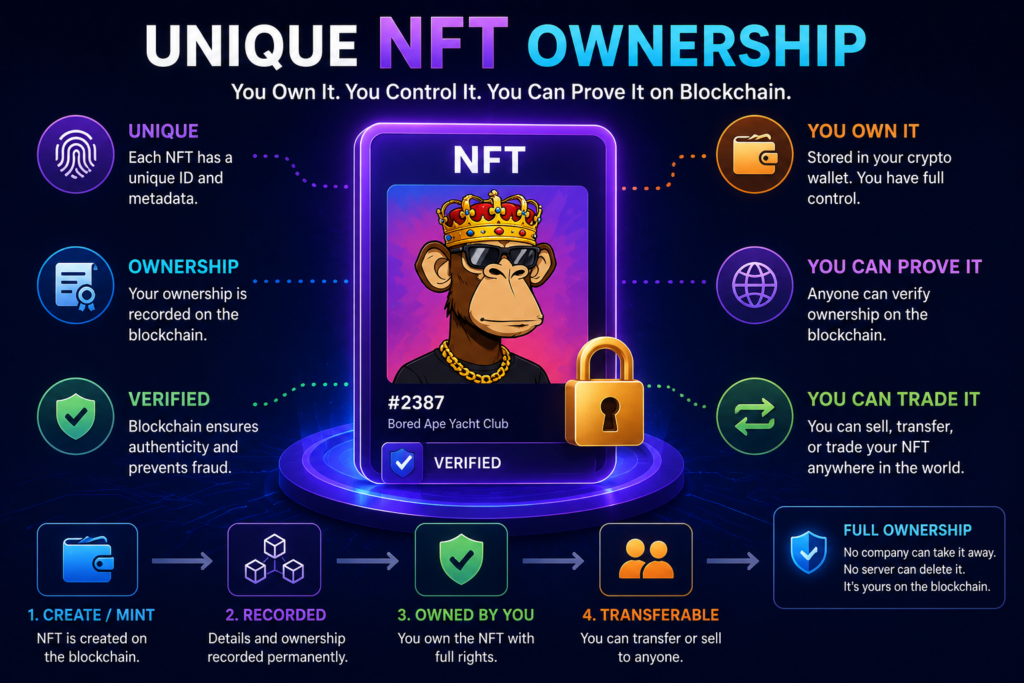
NFTs are unique digital assets stored on blockchain.
Unlike cryptocurrencies:
every NFT is different.
NFTs can represent:
- digital art
- gaming items
- music
- videos
- virtual land
- collectibles
- membership access
Each NFT has:
- unique ownership
- unique identity
- unique blockchain record
Simple Real-Life Example
Imagine:
Bitcoin is like normal money.
If you exchange:
- one ₹500 note
with another ₹500 note
value stays same.
But NFT is different.
NFT is more like:
- original painting
- signed cricket bat
- rare collectible card
Each item is unique.
That is why NFTs are called:
Non-Fungible
NFT vs Cryptocurrency — Main Difference
| Feature | Cryptocurrency | NFT |
| Fungibility | Fungible | Non-Fungible |
| Uniqueness | Same value | Unique value |
| Purpose | Payments & trading | Ownership of digital assets |
| Examples | BTC, ETH, SOL | Bored Ape, CryptoPunk |
| Replaceable | Yes | No |
| Divisibility | Easily divisible | Usually unique |
Why Are Cryptocurrencies Fungible?
Cryptocurrencies are designed like digital money.
For example:
- your Bitcoin and my Bitcoin have same value
- one ETH equals another ETH
This makes crypto useful for:
- payments
- trading
- DeFi
- investing
Without fungibility, crypto could not work efficiently as money.
Why Are NFTs Unique?
NFTs are unique because blockchain stores:
- ownership data
- metadata
- creator information
- transaction history
Even if two NFTs look similar:
their blockchain identity can still be different.
This creates:
- digital scarcity
- ownership proof
- collectible value
Real-World NFT Examples
Popular NFT categories include:
Digital Art
Artists sell artwork as NFTs.
Gaming NFTs
Players own:
- skins
- weapons
- virtual items
Music NFTs
Artists sell music ownership or access.
Metaverse Land
Virtual land can be sold as NFTs.
Membership NFTs
Some NFTs provide:
- event access
- VIP communities
- special benefits
Real-World Cryptocurrency Examples
Bitcoin
Used as:
- digital money
- store of value
Ethereum
Used for:
- smart contracts
- DeFi
- NFTs
- Web3 apps
Stablecoins
Used for:
- low volatility
- crypto trading
- payments
How NFTs and Cryptocurrency Work Together
NFTs and cryptocurrencies are connected.
For example:
- NFTs are usually bought using crypto
- Ethereum is commonly used for NFT transactions
- gas fees are paid in crypto
Without blockchain cryptocurrencies:
NFT ecosystems would not function properly.
Why Did NFTs Become So Popular?
NFTs became popular because they introduced:
Digital Ownership
Before NFTs:
digital files could easily be copied.
But NFTs made it possible to prove:
- originality
- ownership
- authenticity
on blockchain.
This attracted:
- artists
- gamers
- celebrities
- collectors
- brands
Risks of NFTs and Cryptocurrency
Both NFTs and cryptocurrencies have risks.
NFT Risks
1. Scams
Fake NFT projects are common.
2. Hype
Some NFT prices are driven only by hype.
3. Low Liquidity
Some NFTs become difficult to sell.
Cryptocurrency Risks
1. Volatility
Crypto prices can change rapidly.
2. Hacks
Wallets and exchanges can be hacked.
3. Regulations
Government rules may affect crypto markets.
Future of NFTs and Cryptocurrency
Experts believe both technologies may continue growing in the future.
Cryptocurrency may expand in:
- payments
- DeFi
- Web3
NFTs may grow in:
- gaming
- digital identity
- ticketing
- metaverse
- memberships
The future utility of NFTs may become much bigger than just digital art.
Also Read
Before understanding the difference between NFTs and cryptocurrencies, it’s important to learn the basics of blockchain technology. Read our Blockchain: The 5000-Year Story of Trust, Records, and Digital Revolution.
If you’re completely new to NFTs, start with our What Are NFTs? Complete Beginner Guide to understand how non-fungible tokens work and why they are different from cryptocurrencies.
Want to learn how to safely buy your first NFT? Follow our How To Buy NFTs for Beginners in 2026 – Ultimate Complete Step-by-Step Guide before making your first purchase.
To understand where NFTs create real value beyond digital collectibles, read our NFT Use Cases in 2026: 7 Ultimate Real World Applications You Should Know.
After learning the differences between NFTs and cryptocurrencies, continue with our Best NFT Marketplaces in 2026 – Ultimate Complete Beginner Guide to discover the safest platforms for buying, selling, and trading NFTs.
Also Read
FAQ
Are NFTs and cryptocurrency the same?
No. Cryptocurrencies are digital currencies, while NFTs are unique digital assets.
Can NFTs be bought with crypto?
Yes, NFTs are usually purchased using cryptocurrencies like ETH.
Why are NFTs unique?
Each NFT has unique blockchain ownership and metadata.
Is Bitcoin an NFT?
No, Bitcoin is a cryptocurrency, not an NFT.
join our Telegram for instant crypto updates.
Subscribe to our youtube Channel
For detailed crypto market analysis, price predictions, and investment strategies,
subscribe to our YouTube channel Coin Alert
Want to learn more about crypto, Ethereum Layer 2 projects, wallets, blockchain, and Web3?
Visit Coin Alert for more beginner-friendly crypto guides and latest crypto education content.
Disclaimer
This article is for educational purposes only and not financial advice. Cryptocurrency investments are risky. Always do your own research and consult a financial advisor before investing.

Dr. Khushwant Rana is the founder of Coin Alert and has 15+ years of business experience. He creates beginner-friendly crypto educational content focused on Bitcoin, blockchain, Web3, crypto security, and real-world crypto awareness in India.