Cryptocurrency transactions are the foundation of the digital asset ecosystem. Every time someone sends or receives crypto like Bitcoin or Ethereum, the transaction is recorded on a blockchain network.
Unlike traditional banking systems, blockchain transactions do not require intermediaries such as banks. Instead, they rely on decentralized networks of computers that verify and record transactions securely.
Understanding how crypto transactions work is important for anyone who wants to use cryptocurrency safely in 2026.
Every cryptocurrency transaction begins when a user enters the recipient’s wallet address, the amount of cryptocurrency to send, and confirms the transaction using their private key. This digital signature proves ownership of the funds without revealing sensitive personal information. Once signed, the transaction is broadcast to thousands of computers connected to the blockchain network for verification.
Before a cryptocurrency transaction becomes permanent, it enters a temporary waiting area called the mempool. Here, miners or validators select pending transactions based on network rules and transaction fees. Transactions with higher fees are often processed faster, especially during periods of heavy blockchain activity.
After verification, the transaction is grouped with other verified transactions inside a block. This block is linked to previous blocks using cryptographic hashes, creating the blockchain. Once the block is confirmed by the network, the cryptocurrency transaction becomes permanent and cannot normally be reversed or altered.
Different blockchain networks process cryptocurrency transactions at different speeds. Bitcoin transactions usually take several minutes, while modern blockchains such as Solana, Avalanche, and Layer 2 networks can complete transactions within seconds. Transaction speed depends on network congestion, consensus mechanisms, and block production times.
Users can track every cryptocurrency transaction using blockchain explorers. By entering the transaction hash, anyone can check whether a transaction is pending, confirmed, or completed. Blockchain explorers provide complete transparency while protecting user identities through wallet addresses rather than personal information.
What Is a Cryptocurrency Transaction
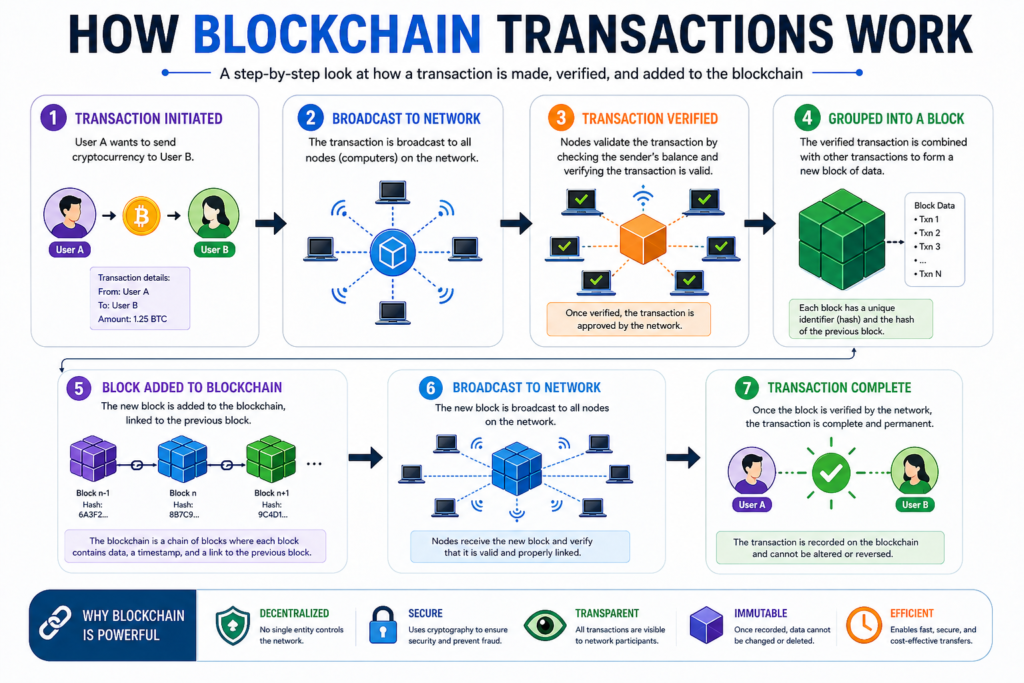
A cryptocurrency transaction is the transfer of digital currency from one wallet to another.
When someone sends cryptocurrency, the transaction is broadcast to the blockchain network. The network then verifies the transaction before adding it to the blockchain ledger.
Each transaction contains important information such as:
Sender wallet address
Receiver wallet address
Transaction amount
Transaction fee
Once verified, the transaction becomes permanent and cannot be changed.
How Blockchain Processes Transactions
Blockchain technology works as a public ledger that records every transaction.
Here is a simple process of how a crypto transaction works:
1 The user sends cryptocurrency from their wallet
2 The transaction is broadcast to the blockchain network
3 Network nodes verify the transaction
4 The transaction is added to a block
5 The block is added to the blockchain
Transaction Fees in Cryptocurrency
Most blockchain networks require a small transaction fee.
Transaction fees are paid to miners or validators who help process and confirm transactions.
For example:
• Bitcoin transactions include mining fees
• Ethereum transactions include gas fees
These fees help keep the network secure and prevent spam transactions.
Why Crypto Transactions Are Secure
Cryptocurrency transactions are considered secure because they use advanced cryptography.
Security features include:
Blockchain encryption
Decentralized validation
Immutable records
Transparency
Once a transaction is confirmed on the blockchain, it cannot be altered or reversed.
Understanding cryptocurrency transactions is one of the most important skills for every crypto investor. Whether you are sending Bitcoin, Ethereum, stablecoins, or any other digital asset, knowing how cryptocurrency transactions work helps you avoid mistakes, reduce transaction costs, and safely use blockchain technology.
As blockchain technology continues to evolve, cryptocurrency transactions are becoming faster, cheaper, and more secure. Future innovations such as Layer 2 networks, zero-knowledge technology, and improved consensus mechanisms will further enhance cryptocurrency transactions across the global blockchain ecosystem.
Also Read
Before understanding cryptocurrency transactions, start with our beginner-friendly guide on What Is Blockchain? to learn how decentralized networks record and verify data.
If you’re completely new to digital assets, read our complete guide on What Is Cryptocurrency? to understand the fundamentals of the crypto ecosystem.
Every crypto transaction is sent and received through a wallet. Explore our detailed guide on What Is a Crypto Wallet? to learn how wallets securely store and manage digital assets.
Most blockchain transactions require users to pay a network fee. Read our guide on Crypto Gas Fees Explained: Why Transaction Fees Exist to understand why these fees are necessary.
After learning how crypto transactions work, continue with our guide on What Is Crypto Transaction Confirmation? to understand how blockchain networks verify and finalize payments.
Also Read
Learn how blockchain transactions work step by step in the official educational guide from Ethereum.org.
Understand how cryptocurrency transactions are created, verified, and recorded on the blockchain with this comprehensive guide from Binance Academy.
Explore the official Bitcoin.org guide to understand how Bitcoin transactions are processed, validated, and secured by the blockchain network.
Conclusion
Cryptocurrency transactions are powered by blockchain technology, which ensures secure and transparent transfers of digital assets.
As cryptocurrency adoption continues to grow in 2026, understanding how transactions work will help users safely interact with blockchain networks and manage their digital assets more effectively.
FAQ
How do cryptocurrency transactions work?
Cryptocurrency transactions are verified by blockchain validators or miners before being permanently recorded on the blockchain ledger.
Can cryptocurrency transactions be reversed?
No. Once confirmed on the blockchain, cryptocurrency transactions cannot normally be reversed.
Why do cryptocurrency transactions require network fees?
Network fees reward validators or miners for processing and securing blockchain transactions.
How long do cryptocurrency transactions take?
Depending on the blockchain network, cryptocurrency transactions can take from a few seconds to several minutes.
Can I track my cryptocurrency transaction?
Yes. Every cryptocurrency transaction can be tracked using a blockchain explorer with its transaction hash.
What is a cryptocurrency transaction?
A cryptocurrency transaction is the transfer of digital currency from one wallet address to another on a blockchain network.
How long do crypto transactions take?
Transaction speed depends on the blockchain network. Some transactions are confirmed within minutes, while others may take longer.
Are crypto transactions reversible?
No. Once a transaction is confirmed on the blockchain, it cannot be reversed.
Do all crypto transactions require fees?
Yes, most blockchain networks require a small fee to process transactions.
join our Telegram for instant crypto updates.
Subscribe to our youtube Channel
For detailed crypto market analysis, price predictions, and investment strategies,
subscribe to our YouTube channel Coin Alert

Dr. Khushwant Rana is the founder of Coin Alert and has 15+ years of business experience. He creates beginner-friendly crypto educational content focused on Bitcoin, blockchain, Web3, crypto security, and real-world crypto awareness in India.