When most beginners hear the word NFT,
they usually think about:
- digital art
- monkey pictures
- expensive JPEG images
But NFTs are becoming much bigger than digital art.
Today many companies are exploring NFTs for:
- gaming
- ticketing
- music
- memberships
- identity systems
- virtual worlds
- real estate
NFT technology is slowly becoming part of the Web3 ecosystem.
In this beginner-friendly guide,
we will explore:
- real NFT use cases
- how NFTs work beyond art
- industries using NFTs
- future possibilities
- why NFTs may become important in daily life
What Are NFTs?
NFT stands for:
Non-Fungible Token
NFTs are unique digital assets stored on blockchain networks.
Unlike cryptocurrencies,
every NFT is different.
NFTs can represent:
- ownership
- identity
- digital items
- virtual assets
Why NFTs Are More Than Digital Art
Digital art made NFTs popular,
but blockchain technology allows NFTs to do much more.
NFTs can prove:
- ownership
- authenticity
- access rights
This creates many real-world use cases.
1. NFTs in Gaming
Gaming is one of the biggest NFT industries.
In blockchain games,
players can truly own:
- skins
- weapons
- characters
- virtual land
Unlike traditional games,
NFT assets may be tradable between players.
Why Gaming NFTs Are Important
In normal games,
items stay inside the game company ecosystem.
But NFT gaming may allow:
- player ownership
- open trading
- transferable assets
This is why many people believe Web3 gaming may grow rapidly.
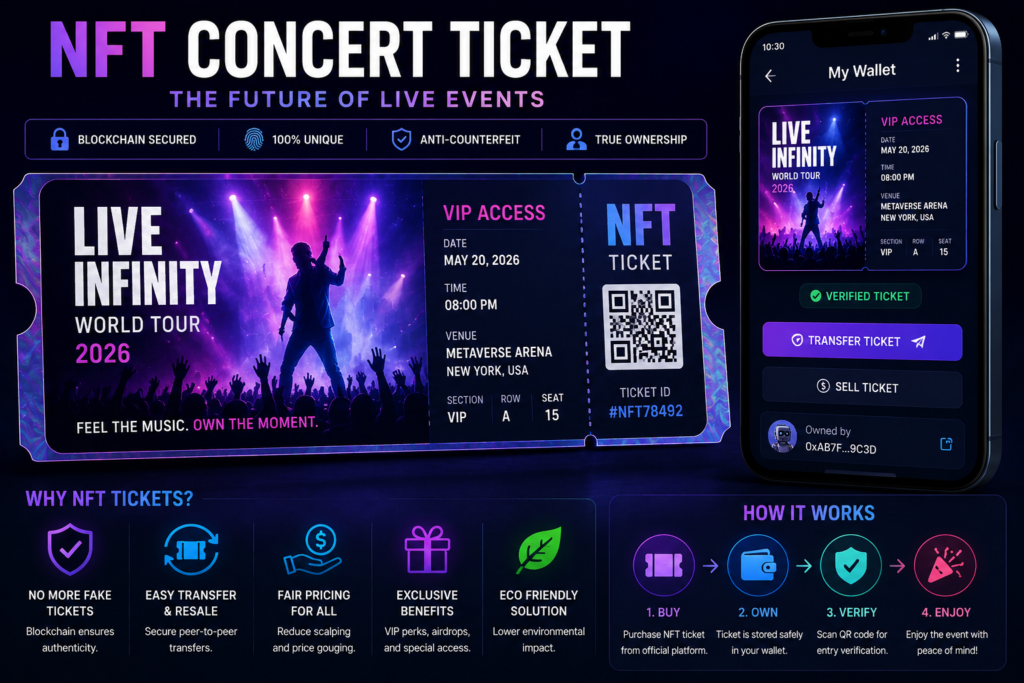
2. NFT Ticketing Systems
NFTs may also transform event ticketing.
Concerts and sports events face problems like:
- fake tickets
- ticket duplication
- scalping
NFT tickets may help solve these problems.
Benefits of NFT Tickets
NFT ticket systems may offer:
- better security
- proof of authenticity
- collectible event memories
Many companies are already testing NFT ticket systems.
3. NFT Memberships
Some projects use NFTs as membership cards.
Holding a specific NFT may unlock:
- private communities
- VIP access
- premium content
- exclusive rewards
This concept is growing rapidly in Web3 communities.
4. NFTs in Music Industry
Musicians are exploring NFTs to connect directly with fans.
NFTs may allow artists to:
- sell exclusive songs
- provide fan access
- create limited collectibles
This may reduce dependence on traditional platforms.
5. Real Estate NFTs
Some companies are experimenting with NFT-based real estate ownership.
NFTs may represent:
- property ownership
- digital land
- legal agreements
Although still early,
many experts believe blockchain property systems may grow in the future.
6. NFT Identity Verification
Identity systems are another important NFT use case.
NFTs may help users control:
- digital identity
- certificates
- educational records
- memberships
This could improve privacy and ownership in Web3 systems.
7. Metaverse and Virtual Assets
NFTs are heavily connected to metaverse projects.
Users may own:
- virtual land
- avatars
- digital fashion
- virtual buildings
Metaverse NFTs may become important in future virtual economies.
Are NFTs the Future of Web3?
Many experts believe NFTs may become an important part of:
- gaming
- digital ownership
- internet identity
- virtual economies
However,
NFT technology is still developing.
Mass adoption may take time.
Problems NFTs Still Face
NFTs still have challenges like:
- scams
- high gas fees
- low-quality projects
- hype culture
That is why education is important before investing.
NFT Use Cases in Gaming
NFT use cases in gaming are among the fastest-growing applications of blockchain technology. Traditional games allow players to purchase skins, weapons, and digital items, but they do not truly own them. NFTs change this model by giving players verifiable ownership of in-game assets.
For example, a rare sword, character skin, or virtual pet can be represented as an NFT. Players can trade these assets with others, sell them on NFT marketplaces, or even use them across multiple gaming ecosystems. This creates a player-owned economy where gamers have more control over their digital possessions.
As blockchain gaming continues to grow, NFT use cases in gaming are expected to become even more important in the future.
NFT Use Cases in Ticketing
One of the most practical NFT use cases is event ticketing. Traditional ticket systems often face problems such as fraud, duplication, and scalping. NFT tickets can help solve these issues.
Each ticket is recorded on the blockchain, making it easy to verify authenticity. Event organizers can track ownership, prevent counterfeit tickets, and even earn royalties when tickets are resold.
Major sports organizations, music festivals, and entertainment companies are already exploring NFT ticketing systems. As adoption increases, NFT use cases in ticketing could become a standard solution for digital events.
NFT Use Cases in Real Estate
NFT use cases are expanding into the real estate sector. Property ownership records can be represented digitally through blockchain technology, making transactions faster and more transparent.
NFTs can simplify property transfers, reduce paperwork, and improve record management. In the future, investors may also purchase fractional ownership of properties through NFT-based systems.
Although regulatory challenges still exist, many experts believe NFT use cases in real estate could significantly modernize the industry.
NFT Use Cases in Identity Verification
Identity management is another area where NFT use cases are gaining attention. Digital identities stored on centralized databases are vulnerable to hacks and data breaches.
NFT-based identity systems can provide secure and verifiable digital credentials. Users can control their personal information and selectively share data when needed.
Governments, universities, and businesses are exploring blockchain-based identity solutions to improve security and reduce fraud.
NFT Use Cases in Membership Programs
Brands are increasingly using NFTs as membership passes. Instead of traditional loyalty cards, customers can hold NFT memberships that unlock exclusive benefits.
These benefits may include premium content, VIP event access, discounts, and community privileges. Because NFTs are unique and verifiable, they create stronger engagement between brands and customers.
Many Web3 communities already use NFTs as digital membership cards, and this trend is expected to continue growing.
Future NFT Use Cases Beyond Art
While NFTs became famous because of digital art collections, their future extends far beyond artwork. Industries such as gaming, ticketing, healthcare, education, real estate, and identity management are exploring blockchain-based ownership systems.
As technology improves and adoption increases, NFT use cases will likely become a regular part of everyday digital life. Businesses are continuously experimenting with new ways to use NFTs, making them one of the most versatile applications of blockchain technology.
The next phase of NFT growth may not be driven by expensive digital art but by practical real-world solutions that improve security, ownership, and transparency.
Future of NFTs in 2026 and Beyond
NFTs may evolve far beyond profile pictures.
Future NFT systems may include:
- blockchain IDs
- virtual business ownership
- gaming economies
- tokenized assets
- AI-powered digital ownership
As Web3 grows,
NFT utility may continue expanding.
Also Read
Before exploring real-world NFT applications, it’s important to understand the basics of blockchain technology. Read our Blockchain: The 5000-Year Story of Trust, Records, and Digital Revolution.
If you’re new to NFTs, start with our What Are NFTs? Complete Beginner Guide to understand how non-fungible tokens work and why they are unique digital assets.
Many NFT use cases are transforming the gaming industry. Learn how in our NFTs in Gaming Explained – How Blockchain Gaming Works in 2026.
NFTs are also a key building block of virtual worlds and digital ownership. Discover their role in our What Is the Metaverse in Crypto? Ultimate Complete Beginner Guide for 2026.
After learning about NFT use cases, continue with our What Is Web3 Gaming? Ultimate Complete Beginner Guide for 2026 to see how NFTs, blockchain, and decentralized technology are shaping the future of gaming and the digital economy.
Also Read
FAQ
Are NFTs only for digital art?
No, NFTs can also be used in gaming, ticketing, memberships, identity systems, and virtual assets.
How are NFTs used in gaming?
NFTs allow players to own and trade in-game assets.
Can NFTs replace tickets?
NFT ticketing systems may reduce fake tickets and improve verification.
What industries may use NFTs in the future?
Gaming, music, real estate, education, identity systems, and metaverse platforms may use NFTs.
What are NFT use cases?
NFT use cases refer to real-world applications of non-fungible tokens, including gaming, ticketing, identity verification, memberships, and digital ownership.
What is NFT ticketing?
NFT ticketing uses blockchain technology to create secure and verifiable event tickets that reduce fraud and counterfeiting.
join our Telegram for instant crypto updates.
Subscribe to our youtube Channel
For detailed crypto market analysis, price predictions, and investment strategies,
subscribe to our YouTube channel Coin Alert
Want to learn more about crypto, Ethereum Layer 2 projects, wallets, blockchain, and Web3?
Visit Coin Alert for more beginner-friendly crypto guides and latest crypto education content.
Disclaimer
This article is for educational purposes only and not financial advice. Cryptocurrency investments are risky. Always do your own research and consult a financial advisor before investing.

Dr. Khushwant Rana is the founder of Coin Alert and has 15+ years of business experience. He creates beginner-friendly crypto educational content focused on Bitcoin, blockchain, Web3, crypto security, and real-world crypto awareness in India.