Cryptocurrency trading has become extremely popular over the last few years. Millions of people around the world are buying and selling digital assets like Bitcoin and Ethereum every day. However, many beginners face an issue called crypto slippage during trading.
Slippage happens when a trade is executed at a slightly different price than expected. This usually occurs because crypto prices move very quickly and the market can change within seconds.
Understanding crypto slippage is important for every trader because it can directly affect profits and losses. In this guide, we will explain what crypto slippage is, why it happens, and how traders can reduce it in 2026.
Beginners should first understand crypto trading for beginners before learning advanced concepts like slippage. https://coinalert.in/crypto-trading-for-beginners-complete-guide-to-start-trading-in-2026/
What Is Crypto Slippage
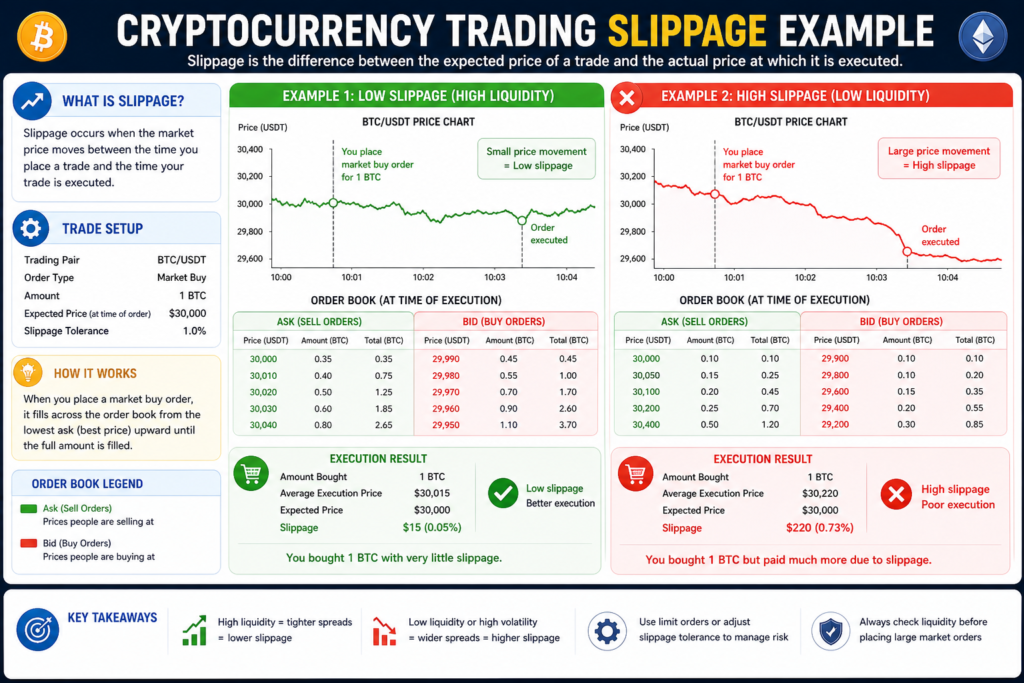
Crypto slippage refers to the difference between the expected price of a trade and the actual price at which the trade is executed.
For example:
If a trader tries to buy Bitcoin at $40,000 but the order gets filled at $40,050, the $50 difference is called slippage.
This happens because cryptocurrency prices change very quickly, and by the time the order is executed, the price may already be different.
Slippage is common in both centralized exchanges and decentralized exchanges.
How Crypto Slippage Works
Slippage occurs when there is a mismatch between buyers and sellers in the market.
When you place a market order, the exchange tries to fill the order at the best available price. If there are not enough orders at your desired price, the system fills the order using the next available prices.
This creates a difference between the expected and final price.
In fast-moving crypto markets, this can happen within seconds.
Slippage often happens when crypto liquidity in trading is low in the market. https://coinalert.in/what-is-crypto-liquidity-and-why-it-matters-in-cryptocurrency-trading-2026-guide/
Types of Slippage
Positive Slippage
Positive slippage occurs when the final trade price is better than expected.
Example:
You place a buy order at $40,000 and the trade executes at $39,980.
In this case, the trader benefits from the price difference.
Negative Slippage
Negative slippage occurs when the trade executes at a worse price than expected.
Example:
You place a buy order at $40,000 but the trade executes at $40,100.
This is more common in volatile crypto markets.
Traders often check cryptocurrency market data to monitor liquidity and price movement. https://coinmarketcap.com/
Why Slippage Happens in Crypto Trading
There are several reasons why slippage happens in cryptocurrency trading.
Low Liquidity
Liquidity refers to how easily a cryptocurrency can be bought or sold without affecting its price.
Coins with low liquidity often experience larger slippage because there are fewer buyers and sellers.
You can learn more about liquidity in this guide about crypto liquidity in trading.
High Market Volatility
Crypto markets are known for their extreme price movements. News, regulations, and market sentiment can quickly change prices.
When markets move rapidly, orders may execute at different prices.
Large Order Size
Large trades can move the market price. If a trader places a large order, the exchange may need to fill it using multiple price levels.
This often results in slippage.
Network Delays
Sometimes blockchain network congestion can slow down transactions, especially on decentralized exchanges.
During this delay, the market price may change.
For a deeper understanding, this guide explains slippage explained in crypto trading. https://academy.binance.com/en/articles/what-is-slippage-in-trading
Slippage in Decentralized Exchanges
Decentralized exchanges (DEXs) like Uniswap allow users to control their slippage tolerance.
This means traders can set a maximum percentage of price change they are willing to accept.
Common slippage tolerance settings include:
0.5%
1%
3%
If the price moves beyond this limit, the transaction fails instead of executing at a worse price.
How Traders Can Reduce Slippage
Although slippage cannot be completely avoided, traders can reduce it using a few strategies.
Use Limit Orders
Limit orders allow traders to set a specific price for buying or selling.
This prevents trades from executing at unexpected prices.
Trade High Liquidity Coins
Popular cryptocurrencies such as Bitcoin and Ethereum usually have higher liquidity and lower slippage.
Avoid Trading During High Volatility
Major news events and sudden market movements can increase slippage.
Trading during stable market conditions can help reduce this risk.
Split Large Orders
Instead of placing one large order, traders can split it into smaller trades.
This reduces the impact on market prices.
Understanding crypto slippage is important for every trader. Whether you are trading on centralized exchanges or decentralized platforms, knowing how slippage works can help you avoid unexpected losses and make smarter trading decisions.
Conclusion
Crypto slippage is a common part of cryptocurrency trading. It occurs when the final trade price is different from the expected price due to market conditions.
Factors such as liquidity, volatility, and order size can influence slippage. By understanding how it works and using strategies like limit orders and high-liquidity markets, traders can reduce its impact.
As the crypto market continues to grow in 2026, learning about concepts like slippage will help traders make smarter and safer decisions.
FAQ
join our Telegram for instant crypto updates.
Subscribe to our youtube Channel
For detailed crypto market analysis, price predictions, and investment strategies,
subscribe to our YouTube channel Coin Alert

Dr. Khushwant Rana is the founder of Coin Alert and has 15+ years of business experience. He creates beginner-friendly crypto educational content focused on Bitcoin, blockchain, Web3, crypto security, and real-world crypto awareness in India.