Many people enter crypto thinking the only way to make money is by buying low and selling high.
But in reality, there are several ways people earn from crypto without daily trading.
One of the most popular methods is:
Crypto Staking

Today, millions of crypto investors are earning passive rewards through staking.
But beginners often ask:
- What is crypto staking?
- Is staking safe?
- How do staking rewards work?
- Can beginners earn passive income from staking?
- Is staking better than mining?
In this complete beginner-friendly guide, we will explain everything in simple language with real examples so even complete beginners can understand crypto staking easily.
What Is Crypto Staking?
Crypto staking is a process where people lock their cryptocurrency in a blockchain network to help secure the network and validate transactions.
In return, they receive:
staking rewards
You can think of staking like:
earning interest from your crypto holdings.
Instead of leaving your crypto unused in a wallet, staking allows your coins to generate passive income over time.
Simple Real-Life Example
Imagine you deposit money into a bank savings account.
The bank rewards you with interest for keeping money there.
Crypto staking works in a similar way.
You lock your crypto:
- the blockchain uses it to secure the network
- you receive rewards for helping the network operate
This is why many long-term investors prefer staking.
How Does Crypto Staking Work?
Many modern blockchains use a system called:
Proof of Stake (PoS)
In this system:
- users lock coins
- validators verify transactions
- the network rewards participants
The more coins someone stakes:
- the greater their chances of helping validate blocks
- the more rewards they may earn
What Is Proof of Stake (PoS)?
Proof of Stake is a blockchain system designed to secure crypto networks without massive electricity usage.
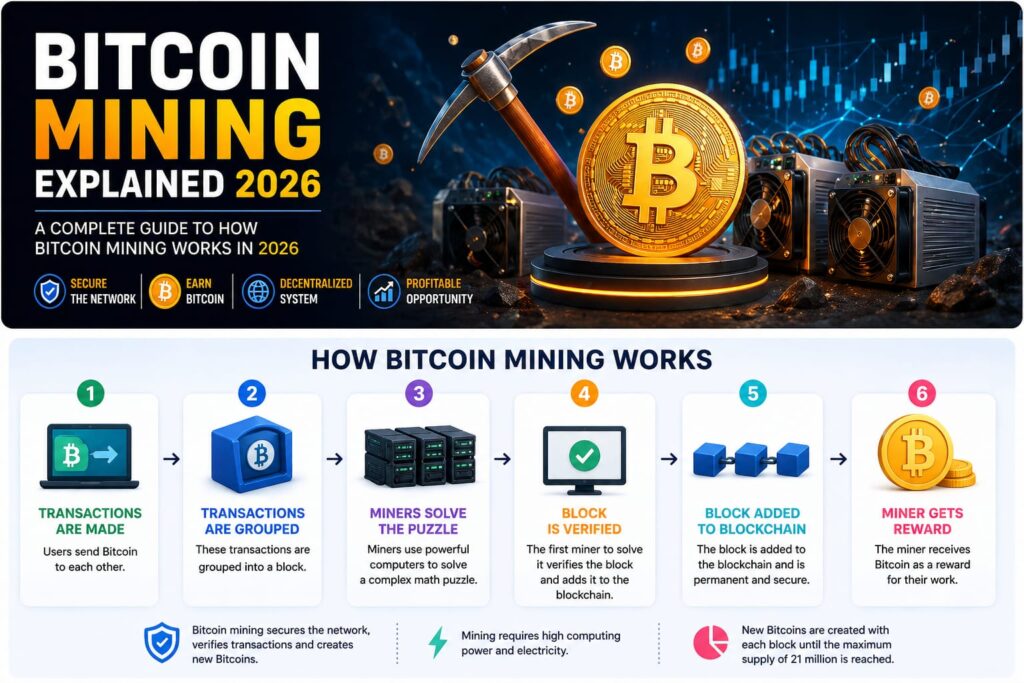
Earlier, Bitcoin used:
Proof of Work (Mining)
which requires:
- powerful machines
- expensive electricity
- large mining farms
Proof of Stake was created to provide:
- better energy efficiency
- lower costs
- faster scalability
Popular PoS coins include:
- Ethereum
- Solana
- Cardano
- Polkadot
- Avalanche
Why Do Blockchains Need Staking?
Blockchains need staking to:
- verify transactions
- maintain decentralization
- secure the network
- prevent fraud and attacks
Without validators and stakers:
a blockchain network cannot operate safely.
This is why staking is extremely important in modern crypto ecosystems.
How Do People Earn Rewards From Staking?
When validators successfully process blocks:
- the blockchain creates rewards
- rewards are distributed to stakers
Rewards usually come in:
- the same cryptocurrency being staked
For example:
- Ethereum staking rewards are paid in ETH
- Solana staking rewards are paid in SOL
Some staking platforms offer:
- daily rewards
- weekly rewards
- flexible staking
- locked staking
Best Coins for Staking in 2026
Some popular staking coins include:
Ethereum (ETH)
One of the largest staking ecosystems after Ethereum moved to Proof of Stake.
Solana (SOL)
Known for:
- fast transactions
- low fees
- growing ecosystem
Cardano (ADA)
Popular among beginners because of simple staking systems.
Polkadot (DOT)
Offers staking opportunities with strong interoperability features.
Avalanche (AVAX)
A fast-growing blockchain with increasing staking adoption.
Crypto Staking vs Mining
Many beginners confuse staking and mining.
But both are different.
| Crypto Staking | Crypto Mining |
| Uses Proof of Stake | Uses Proof of Work |
| Energy efficient | High electricity usage |
| No expensive machines needed | Requires mining hardware |
| Easier for beginners | More technical |
| Passive income system | Hardware-based rewards |
Today, many new blockchains prefer staking because it is more scalable and eco-friendly.
Benefits of Crypto Staking
1. Passive Income
You can earn rewards without active trading.
2. Energy Efficient
Staking uses far less electricity than mining.
3. Supports Blockchain Networks
Staking helps secure and maintain decentralized systems.
4. Beginner Friendly
Many exchanges allow simple one-click staking.
5. Long-Term Wealth Building
Long-term holders can grow their crypto holdings gradually through rewards.
Risks of Crypto Staking
Crypto staking also has risks.
Major Risks Include:
- crypto market crashes
- coin price volatility
- lock-up periods
- platform hacks
- validator penalties
- project failure
Even if staking rewards are attractive:
coin prices can still fall significantly.
This is why research is extremely important.
Is Crypto Staking Safe?
Crypto staking can be relatively safe if:
- you use trusted platforms
- choose strong blockchain projects
- avoid fake staking scams
However:
crypto always carries risk.
Beginners should avoid:
- unrealistic APY promises
- unknown projects
- guaranteed profit claims
If something looks too good to be true, it usually is.
Can Beginners Start Staking?
Yes, staking is considered beginner friendly today.
Many exchanges now offer:
- simple staking dashboards
- flexible staking options
- automatic reward systems
But beginners should:
- start small
- learn gradually
- understand risks first
Never invest emotionally.
Also Read
Before learning about Crypto Staking, it’s important to understand the foundation of blockchain technology. Read our Blockchain: The 5000-Year Story of Trust, Records, and Digital Revolution.
Crypto Staking is closely connected to Ethereum’s Proof of Stake (PoS) network. To understand why Ethereum switched from mining to staking, read our Ethereum Story: How Vitalik Buterin Created Ethereum and Changed Crypto.
Want to learn how staking generates passive income through decentralized finance? Read our What Is DeFi in Crypto? Ultimate Easy Beginner Guide (2026) to understand how DeFi and staking work together.
Before staking your cryptocurrency, it’s important to understand how blockchain transactions are verified. Read our How Cryptocurrency Transactions Work on Blockchain in 2026 to learn how validators secure blockchain networks.
After learning about Crypto Staking, continue with our What Is EigenLayer? Complete Beginner Guide 2026 to discover how Ethereum’s revolutionary restaking technology is improving blockchain security, staking rewards, and decentralized infrastructure.
Also Read
Crypto Market Data https://coinmarketcap.com/
Crypto Education https://www.binance.com/en/academy
Blockchain Analytics https://www.coingecko.com/
Official Ethereum Website https://ethereum.org/
Final Conclusion
Crypto staking has become one of the most popular ways to earn passive income in the crypto market.
It allows investors to:
- support blockchain networks
- earn rewards
- participate in decentralized ecosystems
While staking offers attractive opportunities, crypto remains highly volatile and risky.
If you are a beginner:
- focus on learning first
- avoid hype
- use proper risk management
- choose trusted projects only
At Coin Alert, we explain crypto in simple and beginner-friendly language so everyone can understand blockchain and digital assets without confusion.
FAQ
What is crypto staking?
Crypto staking is the process of locking crypto coins to help secure blockchain networks and earn rewards.
Is staking profitable?
Staking can generate passive rewards, but profits depend on market conditions and coin prices.
Is crypto staking safe for beginners?
It can be safe if beginners use trusted platforms and strong crypto projects.
Which crypto is best for staking?
Popular staking coins include Ethereum, Solana, Cardano, Avalanche, and Polkadot.
join our Telegram for instant crypto updates.
Subscribe to our youtube Channel
For detailed crypto market analysis, price predictions, and investment strategies,
subscribe to our YouTube channel Coin Alert

Dr. Khushwant Rana is the founder of Coin Alert and has 15+ years of business experience. He creates beginner-friendly crypto educational content focused on Bitcoin, blockchain, Web3, crypto security, and real-world crypto awareness in India.