Cryptocurrency markets are known for their rapid price movements. Unlike traditional financial markets, crypto prices can rise or fall dramatically within minutes. This behavior is known as crypto volatility.
Volatility is one of the most important concepts in cryptocurrency trading and investing. It creates opportunities for traders to make profits, but it also increases the risk of losses.
In this guide, we will explain what crypto volatility is, why it happens, and why it plays a major role in cryptocurrency markets in 2026.
What Is Crypto Volatility
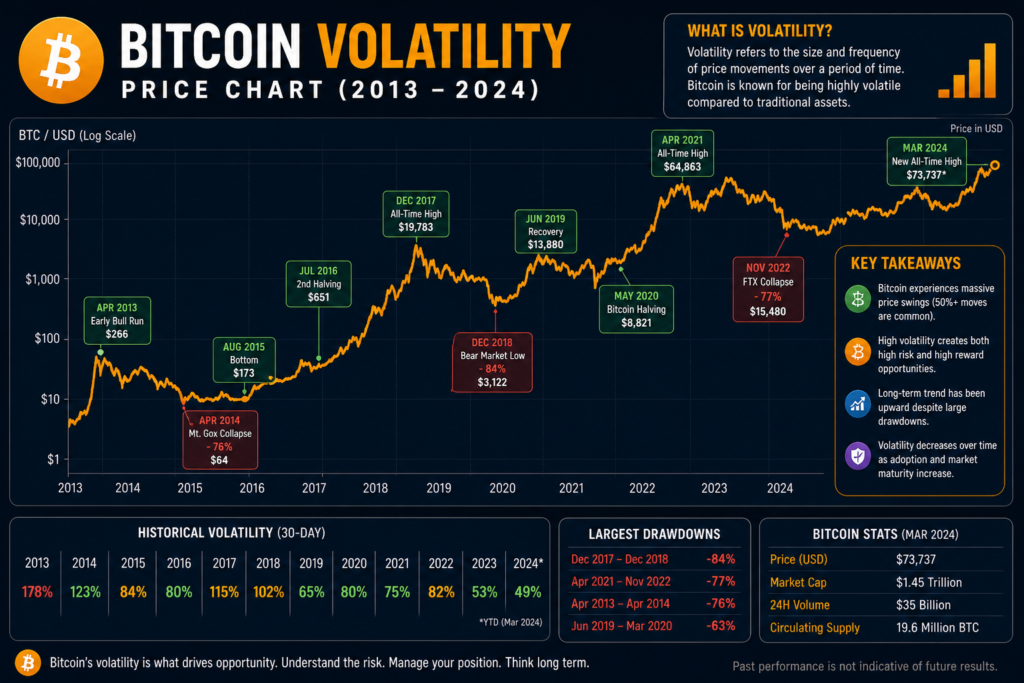
Crypto volatility refers to the degree of price fluctuation in a cryptocurrency over a specific period of time.
When the price of a cryptocurrency changes rapidly and frequently, it is considered highly volatile.
For example:
If Bitcoin moves from $40,000 to $42,000 within a few hours, this shows high volatility.
Cryptocurrencies are generally more volatile than traditional assets like stocks or gold.
Why Cryptocurrency Markets Are Volatile
There are several factors that make cryptocurrency markets highly volatile.
Market Sentiment
Crypto prices are heavily influenced by investor sentiment. News, social media trends, and public opinion can quickly change how people feel about a particular coin.
Positive news can drive prices up, while negative news can cause sudden drops.
Supply and Demand
The price of cryptocurrencies depends on supply and demand.
When demand increases and supply is limited, prices rise quickly. If demand suddenly drops, prices can fall just as fast.
Market data platforms such as CoinMarketCap help traders monitor these changes.
Low Market Liquidity
Some cryptocurrencies have lower liquidity compared to major financial markets. When fewer buyers and sellers are available, even small trades can move prices significantly.
You can learn more about liquidity in our guide on crypto liquidity.
Regulatory News
Government regulations and policies can affect crypto prices.
Announcements related to crypto bans, regulations, or legal acceptance often create sudden market movements.
Types of Volatility in Crypto
Historical Volatility
Historical volatility measures how much a cryptocurrency’s price has fluctuated in the past.
Traders use this data to understand how risky an asset might be.
Implied Volatility
Implied volatility reflects the market’s expectations of future price movements.
It is often used in advanced trading strategies.
Why Volatility Matters for Crypto Traders
Volatility plays a major role in how traders and investors approach the market.
Profit Opportunities
High volatility creates opportunities for traders to profit from short-term price movements.
Many day traders rely on volatility to make quick trades.
Risk Management
While volatility creates profit opportunities, it also increases risk.
Sudden price drops can lead to significant losses if traders are not prepared.
Beginners should first understand the basics of crypto trading before dealing with volatile markets.
Market Growth
Volatility is also a sign of an evolving market. As the crypto industry grows and adoption increases, volatility may gradually stabilize.
Educational platforms such as Binance Academy provide resources to help users understand market behavior.
How Traders Manage Crypto Volatility
Experienced traders use several strategies to handle volatile markets.
Diversification
Investing in multiple cryptocurrencies reduces the risk of losses from a single asset.
Stop-Loss Orders
Stop-loss orders automatically close trades when prices reach a certain level, helping limit potential losses.
Long-Term Investing
Many investors prefer holding cryptocurrencies for the long term instead of reacting to short-term volatility.
Also Read
To understand why cryptocurrency prices fluctuate so much, start with our beginner-friendly guide on What Is Cryptocurrency?.
Crypto volatility is heavily influenced by market cycles. Learn how bullish and bearish trends work in our guide on What Is a Bull Market and Bear Market in Crypto?.
Bitcoin often drives the entire crypto market. Read our complete guide on What Is Bitcoin? to understand why its price movements affect other cryptocurrencies.
Market volatility can create both opportunities and risks. Explore our detailed guide on What Is Risk Management in Crypto Trading? to learn how investors protect their capital.
After understanding crypto volatility, continue with our guide on What Is Market Capitalization in Cryptocurrency? to learn how market size influences price stability.
Also Read
Learn what causes cryptocurrency price volatility and how markets react to news, liquidity, and investor sentiment in this guide from Binance Academy.
Explore educational resources from CME Group to understand market volatility, price discovery, and risk management in financial markets.
Read research and educational content from the U.S. Securities and Exchange Commission – Investor.gov to understand investment risk, market fluctuations, and informed decision-making.
Conclusion
Crypto volatility is one of the defining characteristics of cryptocurrency markets. Prices can change rapidly due to market sentiment, supply and demand, regulatory news, and liquidity.
While volatility creates opportunities for traders, it also introduces risks that require proper risk management strategies. By understanding how volatility works, investors can make smarter decisions and navigate the crypto market more confidently in 2026.
FAQ
join our Telegram for instant crypto updates.
Subscribe to our youtube Channel
For detailed crypto market analysis, price predictions, and investment strategies,
subscribe to our YouTube channel Coin Alert

Dr. Khushwant Rana is the founder of Coin Alert and has 15+ years of business experience. He creates beginner-friendly crypto educational content focused on Bitcoin, blockchain, Web3, crypto security, and real-world crypto awareness in India.