Blockchain technology is growing rapidly, but scalability and high transaction fees remain major problems for many networks.
Ethereum is one of the most popular blockchains in the world, but during busy periods:
- Gas fees become expensive
- Transactions slow down
- Network congestion increases
This is where Polygon (MATIC) becomes important.
Polygon was created to help Ethereum become faster, cheaper, and more scalable.
In this beginner-friendly guide, we will understand:
- What Polygon is
- How Polygon works
- Why Polygon was created
- MATIC token utility
- Polygon ecosystem
- NFTs, gaming, and DeFi on Polygon
- Future of Polygon in 2026
What Is Polygon (MATIC)?
Polygon is a blockchain scaling platform designed to improve Ethereum.
It helps users:
- Reduce transaction fees
- Increase transaction speed
- Build scalable decentralized applications
Polygon is commonly known as:
An Ethereum scaling solution
Its native cryptocurrency is called:
MATIC
Why Was Polygon Created?
Ethereum became extremely popular because of:
- Smart contracts
- DeFi
- NFTs
- Web3 applications
But popularity created problems:
- High gas fees
- Slow transaction speeds
- Scalability limitations
Polygon was created to solve these issues.
Simple Example
Imagine Ethereum as a busy highway.
When too many cars enter the highway:
- Traffic increases
- Movement slows
- Costs become higher
Polygon acts like:
An extra fast lane
It helps reduce congestion and improve efficiency.
How Does Polygon Work?
Polygon processes transactions more efficiently than Ethereum’s main network.
Instead of handling everything directly on Ethereum:
- Some activity happens on Polygon
- Transactions become cheaper
- Speed improves significantly
Polygon still benefits from Ethereum’s ecosystem and security.
What Is the MATIC Token?
MATIC is Polygon’s native cryptocurrency.
It is used for:
- Paying transaction fees
- Staking
- Governance
- Network security
Users need MATIC tokens to interact with Polygon applications.
Key Features of Polygon
1. Low Transaction Fees
Polygon transactions are usually much cheaper than Ethereum.
In many cases:
- Ethereum fees may cost several dollars
- Polygon fees may cost only a few cents
This makes Polygon attractive for beginners.
2. Fast Transactions
Polygon can process transactions much faster than Ethereum’s main blockchain.
This improves:
- User experience
- Gaming applications
- NFT trading
- DeFi usage
3. Ethereum Compatibility
Polygon supports Ethereum-based applications and smart contracts.
Developers can easily move Ethereum apps to Polygon.
4. Strong Web3 Ecosystem
Polygon supports many:
- Web3 projects
- NFT marketplaces
- DeFi platforms
- Blockchain games
Its ecosystem continues growing rapidly.
Polygon and DeFi
Polygon became popular in decentralized finance (DeFi) because users wanted lower fees.
Many DeFi applications moved to Polygon to:
- Save costs
- Improve speed
- Attract more users
Popular DeFi activities include:
- Lending
- Borrowing
- Staking
- Yield farming
Polygon and NFTs
Polygon is widely used in the NFT industry.
Why?
Because NFT minting on Ethereum can be expensive.
Polygon helps:
- Reduce NFT transaction costs
- Improve scalability
- Support gaming NFTs
Many NFT marketplaces now support Polygon.
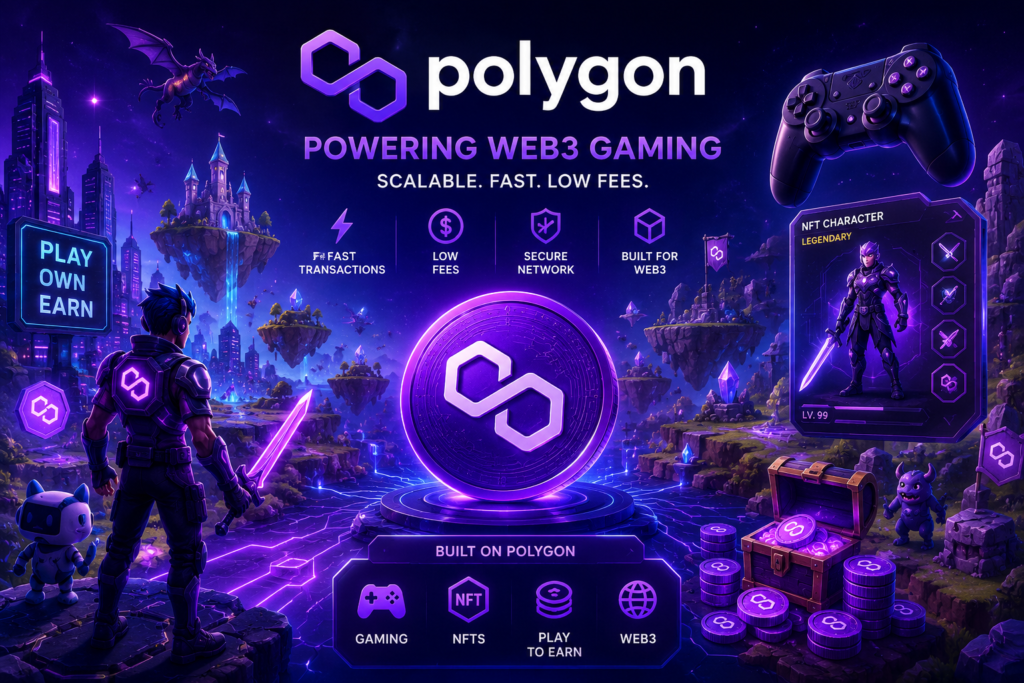
Polygon and Blockchain Gaming
Blockchain gaming requires:
- Fast transactions
- Low fees
- Scalability
Polygon became popular among Web3 gaming developers because it provides all three.
Many crypto games use Polygon infrastructure.
Is Polygon a Layer 2 Blockchain?
Polygon is commonly described as an Ethereum scaling solution.
However, Polygon uses multiple scaling technologies and sidechain infrastructure.
Many beginners simply refer to Polygon as:
A Layer 2 scaling platform
Advantages of Polygon
Lower Fees
Cheaper than Ethereum mainnet.
Faster Transactions
Improved scalability and speed.
Developer Friendly
Easy for Ethereum developers to use.
Strong Ecosystem
Supports DeFi, NFTs, and gaming.
Growing Adoption
Many companies and projects use Polygon.
Risks of Polygon
Like all crypto projects, Polygon also has risks.
Possible risks include:
- Market volatility
- Competition from other Layer 2 networks
- Smart contract vulnerabilities
- Regulatory uncertainty
Beginners should always research carefully before investing.
Polygon vs Ethereum
| Feature | Ethereum | Polygon |
| Fees | High | Low |
| Speed | Slower During Congestion | Faster |
| Scalability | Limited | Improved |
| Ecosystem | Massive | Rapidly Growing |
| Main Role | Base Blockchain | Scaling Solution |
Polygon vs Arbitrum
Both Polygon and Arbitrum aim to improve Ethereum scalability.
However:
- Polygon uses different scaling technologies
- Arbitrum mainly uses optimistic rollups
Both projects are important in the Layer 2 ecosystem.
Future of Polygon in 2026
Polygon continues expanding into:
- Web3
- Gaming
- NFTs
- Enterprise blockchain solutions
- AI and blockchain integration
As crypto adoption grows, scalable blockchain infrastructure may become increasingly important.
Polygon is expected to remain a major player in Ethereum scaling.
Real-World Use Cases of Polygon
Polygon is used for:
- NFT marketplaces
- Blockchain gaming
- DeFi platforms
- Crypto payments
- Web3 applications
Many major crypto companies already support Polygon.
Also Read
Before learning about Polygon (MATIC), it’s important to understand the fundamentals of blockchain technology. Read our Blockchain: The 5000-Year Story of Trust, Records, and Digital Revolution.
Polygon is one of Ethereum’s most successful scaling ecosystems. To understand why Ethereum needed Layer 2 solutions, read our Ethereum Story: How Vitalik Buterin Created Ethereum and Changed Crypto.
Want to discover Polygon’s latest Zero-Knowledge scaling technology? Read our What Is Polygon zkEVM? Ultimate Complete Beginner Guide for 2026 to understand how Polygon is improving Ethereum’s scalability.
To compare Polygon with other leading Ethereum Layer 2 networks, read our What Is Arbitrum? Best Beginner Guide for 2026 and explore how different Layer 2 solutions reduce gas fees and improve transaction speed.
After learning about Polygon (MATIC), continue with our Ethereum Gas Fees Explained for Beginners in 2026 | Ultimate Complete Guide to understand why Ethereum transaction fees become expensive and how Layer 2 networks like Polygon help solve this problem.
Also Read
Polygon Official Website. https://polygon.technology/
Ethereum Official Website. https://ethereum.org/
CoinMarketCap Polygon. https://coinmarketcap.com/currencies/polygon/
Final Thoughts
Polygon (MATIC) is one of the most important blockchain scaling platforms in the crypto industry.
It helps Ethereum become:
- Faster
- Cheaper
- More scalable
Because of its strong ecosystem, low fees, and growing adoption, Polygon continues attracting developers, investors, gamers, and Web3 users in 2026.
For beginners entering crypto, understanding Polygon is important because it plays a major role in the future of blockchain scalability.
FAQ
What is Polygon (MATIC)?
Polygon is an Ethereum scaling platform that improves speed and reduces fees.
What is MATIC used for?
MATIC is used for fees, staking, governance, and network security.
Is Polygon better than Ethereum?
Polygon is faster and cheaper, but Ethereum remains the core blockchain.
Is Polygon a Layer 2 blockchain?
Polygon is commonly considered an Ethereum scaling solution.
Why is Polygon popular?
Polygon became popular because of low fees and fast transactions.
join our Telegram for instant crypto updates.
Subscribe to our youtube Channel
For detailed crypto market analysis, price predictions, and investment strategies,
subscribe to our YouTube channel Coin Alert

Dr. Khushwant Rana is the founder of Coin Alert and has 15+ years of business experience. He creates beginner-friendly crypto educational content focused on Bitcoin, blockchain, Web3, crypto security, and real-world crypto awareness in India.