Blockchain technology is growing rapidly, but one major challenge still exists:
Scalability
As more people use blockchain networks, transactions can become:
- Slower
- More expensive
- Congested
This is where Layer 1 and Layer 2 blockchain solutions become important.
What Is Ethereum and How Does It Work in 2026?
In this beginner-friendly guide, we will understand:
- What Layer 1 means
- What Layer 2 means
- Why blockchain scaling matters
- Ethereum gas fee problems
- Polygon, Arbitrum, and Optimism
- Real-world examples
- Which system may dominate in 2026
What Is Blockchain Scalability?
Scalability means:
How efficiently a blockchain can handle large numbers of transactions.
A scalable blockchain should:
- Process transactions quickly
- Keep fees low
- Support millions of users
Example:
If millions of people suddenly use Ethereum at the same time:
- Network becomes busy
- Gas fees increase
- Transactions slow down
This is called:
Blockchain congestion
What Is Layer 1 Blockchain?
Layer 1 refers to:
The main blockchain network itself.
Examples of Layer 1 blockchains:
- Bitcoin
- Ethereum
- Solana
- Avalanche
- Cardano
- Polkadot
These are the original blockchain foundations where transactions are recorded directly.
What Is Web3 and How It Will Change the Internet in 2026?
How Does Layer 1 Work?
Layer 1 blockchains handle:
- Transaction processing
- Security
- Consensus mechanisms
- Smart contracts
For example:
Ethereum itself is a Layer 1 blockchain.
Every transaction:
- Happens directly on Ethereum
- Uses Ethereum validators
- Requires gas fees
Advantages of Layer 1 Blockchains
Strong Security
Layer 1 networks usually provide strong decentralization and security.
Independent Ecosystem
They operate independently without relying on another blockchain.
Core Infrastructure
They support smart contracts, DeFi, NFTs, and Web3 applications.
Problems With Layer 1 Blockchains
As usage grows, Layer 1 blockchains may face:
Slow Transactions
Networks become crowded.
High Gas Fees
Users pay expensive transaction costs.
Scalability Limits
Some blockchains cannot process enough transactions quickly.
Example:
During NFT launches on Ethereum:
- Gas fees sometimes become extremely high.
What Is Layer 2 Blockchain?
Layer 2 is a secondary solution built on top of Layer 1 blockchains.
What Is Avalanche (AVAX)?
Its goal is to:
- Improve speed
- Reduce fees
- Increase scalability
Instead of processing everything directly on Ethereum, some work is handled separately.
Simple Example of Layer 2
Imagine a busy highway.
Layer 1:
= Main highway
Layer 2:
= Extra fast lanes built to reduce traffic
This helps:
- Faster movement
- Lower congestion
- Better efficiency
Popular Layer 2 Networks
Some popular Layer 2 blockchain projects include:
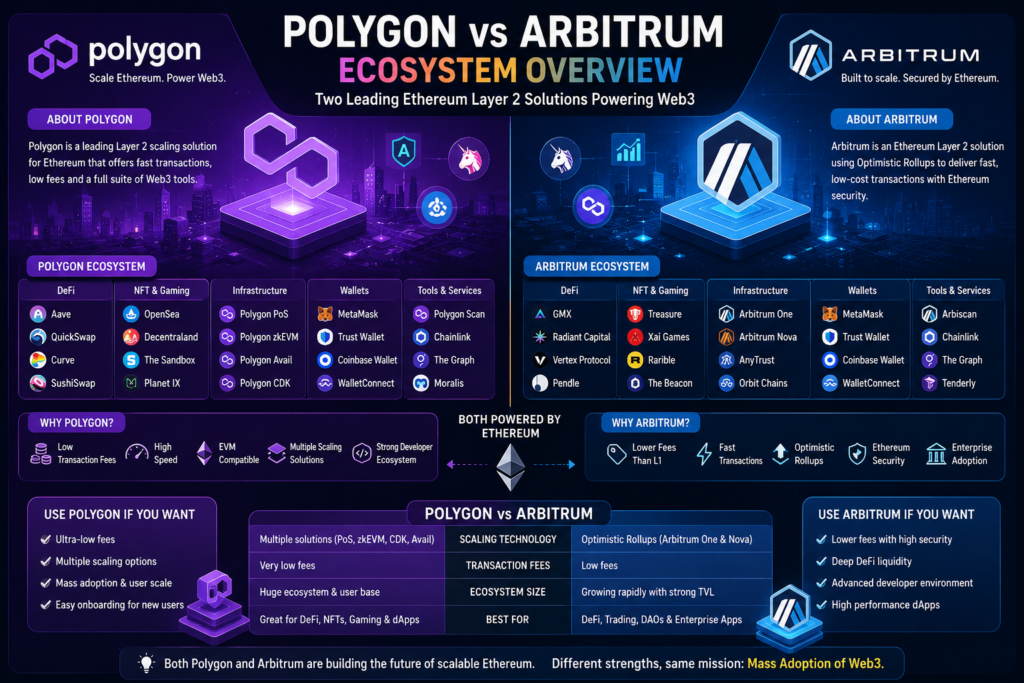
- Polygon (MATIC)
- Arbitrum
- Optimism
- zkSync
- Starknet
Most Layer 2 networks currently focus on scaling Ethereum.
What Is Polkadot (DOT)? https://coinalert.in/what-is-polkadot-dot-and-how-does-it-work-in-2026
Why Ethereum Needs Layer 2 Solutions
Ethereum is extremely popular because of:
- DeFi
- NFTs
- Web3 apps
- Smart contracts
But popularity creates problems:
- High network traffic
- Expensive gas fees
- Slower transactions
Layer 2 solutions help reduce these issues.
What Is Polygon (MATIC)?
Polygon is one of the most popular Ethereum scaling solutions.
It helps users:
- Save transaction fees
- Process transactions faster
- Use decentralized apps efficiently
Polygon became popular because Ethereum gas fees were very high.
What Is Arbitrum?
Arbitrum is a Layer 2 scaling network for Ethereum.
It uses special technology called:
Optimistic Rollups
Arbitrum:
- Reduces gas costs
- Increases transaction speed
- Supports Ethereum-based applications
What Is Optimism?
Optimism is another Ethereum Layer 2 network.
Like Arbitrum, it:
- Improves scalability
- Lowers fees
- Helps Ethereum handle more users
Many decentralized applications now support Optimism.
Ethereum Official Website.
https://ethereum.org/-does-it-work-in-2026
What Are Rollups?
Rollups are Layer 2 technologies that:
- Bundle multiple transactions together
- Process them efficiently
- Send summarized data back to Ethereum
This reduces:
- Network congestion
- Transaction costs
Layer 1 vs Layer 2 Comparison
| Feature | Layer 1 | Layer 2 |
| Main Role | Base Blockchain | Scaling Solution |
| Speed | Slower During Congestion | Faster |
| Fees | Higher | Lower |
| Security | Very Strong | Depends on Layer 1 |
| Examples | Ethereum, Bitcoin | Polygon, Arbitrum |
| Scalability | Limited | Improved |
Which Is More Important?
Both Layer 1 and Layer 2 are important.
Layer 1
Provides:
- Security
- Decentralization
- Core blockchain infrastructure
Layer 2
Provides:
- Speed
- Scalability
- Lower fees
They work together.
Are Layer 2 Networks Safe?
Most major Layer 2 projects are considered relatively secure, but risks still exist.
Possible risks:
- Smart contract bugs
- Technical vulnerabilities
- Bridge risks
Beginners should always use trusted projects.
Polygon Official Website. https://polygon.technology/
Why Layer 2 Matters in 2026
As crypto adoption grows:
- More users join blockchain networks
- More Web3 apps launch
- More gaming and NFT activity increases
Without scaling solutions:
- Fees could become extremely expensive
- Networks may struggle
Layer 2 technology is expected to become even more important in 2026.
Real-World Example
Imagine sending money on Ethereum directly:
- Gas fee = $20
Using Layer 2:
- Fee may drop to a few cents
This makes blockchain technology more practical for everyday users.
Future of Layer 1 and Layer 2
Many experts believe:
- Layer 1 and Layer 2 will grow together
- Ethereum scaling will improve
- Web3 adoption will increase rapidly
Future blockchain ecosystems may combine:
- Security
- Speed
- Scalability
- Low costs
through Layer 2 innovation.
Arbitrum Official Website. https://arbitrum.io/
Final Thoughts
Layer 1 and Layer 2 blockchains are essential parts of modern crypto infrastructure.
Layer 1 provides the foundation and security, while Layer 2 improves scalability and reduces costs.
As blockchain adoption grows in 2026, understanding these technologies will become increasingly important for crypto investors, Web3 users, and beginners entering the blockchain space.
FAQ
What is Layer 1 blockchain?
Layer 1 is the main blockchain network such as Ethereum or Bitcoin.
What is Layer 2 blockchain?
Layer 2 is a scaling solution built on top of Layer 1 blockchains.
Why does Ethereum need Layer 2?
Ethereum needs Layer 2 to reduce gas fees and improve scalability.
Is Polygon a Layer 2?
Yes, Polygon is commonly used as an Ethereum scaling solution.
Which is faster: Layer 1 or Layer 2?
Layer 2 networks are usually faster and cheaper.
join our Telegram for instant crypto updates.
Subscribe to our youtube Channel
For detailed crypto market analysis, price predictions, and investment strategies,
subscribe to our YouTube channel Coin Alert