Cryptocurrency networks use different mechanisms to validate transactions and secure their blockchains. Two of the most common consensus mechanisms are Proof of Work (PoW) and Proof of Stake (PoS).
These systems help decentralized networks agree on which transactions are valid without relying on a central authority. In this guide, we will explain the difference between Proof of Work and Proof of Stake, how they function, and why they are important for blockchain security.
What Is Proof of Work (PoW)?
Proof of Work is the original consensus mechanism used in blockchain networks. It requires powerful computers to solve complex mathematical problems in order to validate transactions and add new blocks to the blockchain.
The first cryptocurrency to use Proof of Work was Bitcoin, where miners compete to solve cryptographic puzzles. The miner who solves the puzzle first gets the right to add a new block and receives a reward in cryptocurrency.
Because solving these puzzles requires significant computing power, Proof of Work is considered very secure but also energy-intensive.
How Proof of Work Works
The Proof of Work process typically includes the following steps:
Transactions are broadcast to the network
Miners collect transactions into blocks
Computers compete to solve a complex cryptographic puzzle
The first miner to solve the puzzle adds the block to the blockchain
The miner receives a block reward
Mining requires specialized hardware and consumes a large amount of electricity.
What Is Proof of Stake (PoS)?
Proof of Stake is a newer consensus mechanism designed to be more energy-efficient than Proof of Work.
Instead of using powerful computers to mine blocks, Proof of Stake selects validators based on the amount of cryptocurrency they stake in the network.
For example, the blockchain network Ethereum transitioned from Proof of Work to Proof of Stake to improve efficiency and scalability.
Validators earn rewards for helping secure the network and confirming transactions.
How Proof of Stake Works
The Proof of Stake system works through the following process:
Users lock their cryptocurrency as a stake
The network selects validators randomly
Validators confirm new transactions
A new block is added to the blockchain
Validators receive staking rewards
This system requires far less electricity than traditional mining.
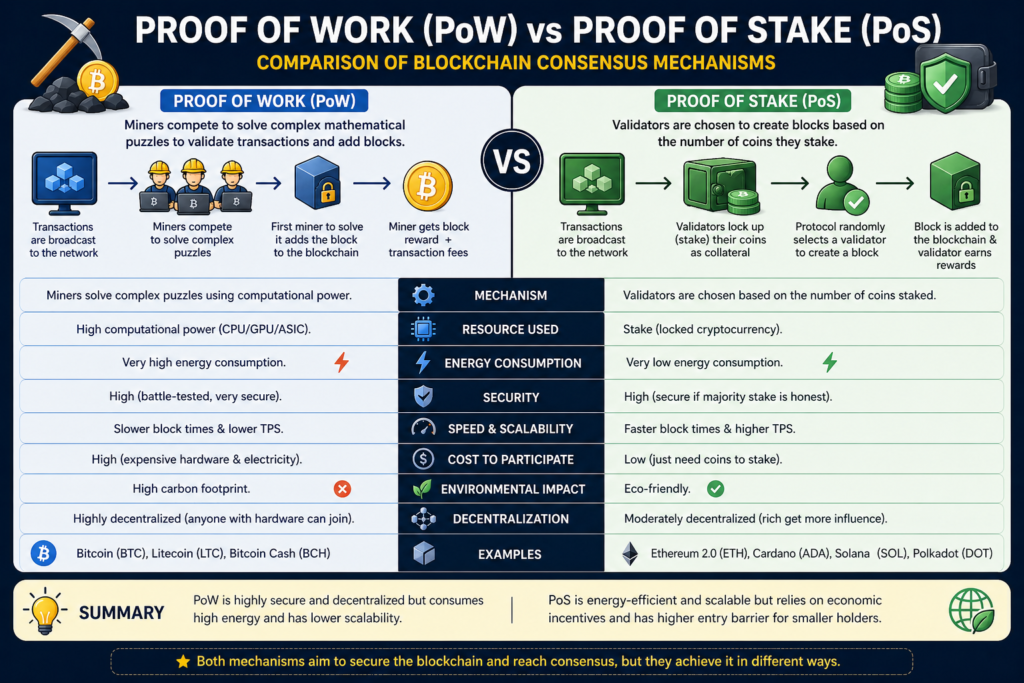
Proof of Work vs Proof of Stake: Key Differences
| Feature | Proof of Work | Proof of Stake |
| Energy Use | Very high | Low |
| Hardware | Mining rigs required | No expensive hardware |
| Security | Highly secure | Secure but different model |
| Speed | Slower | Faster |
| Cost | Expensive mining | Lower operational cost |
Advantages of Proof of Work
Proof of Work offers several advantages:
Proven security model
Highly decentralized mining networks
Resistant to certain types of attacks
Trusted by large cryptocurrencies like Bitcoin
However, the main criticism is its high energy consumption.
Advantages of Proof of Stake
Proof of Stake has become popular because it offers:
Energy efficiency
Faster transaction processing
Lower entry barriers
Scalability improvements
Many modern blockchains prefer Proof of Stake for sustainability reasons.
Which Is Better: PoW or PoS?
Both systems have strengths and weaknesses. Proof of Work is considered extremely secure and battle-tested, while Proof of Stake offers better efficiency and scalability.
Both Proof of Work and Proof of Stake have their advantages and disadvantages. Proof of Work offers higher security and has been tested for many years through networks like Bitcoin. Proof of Stake is more energy-efficient and scalable, which is why many modern blockchains prefer it.
The choice depends on the goals of the blockchain network and its community.
Also Read
Before comparing Proof of Work and Proof of Stake, start with our beginner-friendly guide on What Is Blockchain? to understand how blockchain networks operate.
Proof of Work was first introduced by Bitcoin. Read our complete guide on What Is Bitcoin? to learn how the original blockchain uses the PoW consensus mechanism.
Proof of Stake became widely adopted after Ethereum’s transition from PoW. Explore our guide on What Is Ethereum? to understand why the network made this historic change.
Proof of Work relies on mining, while Proof of Stake relies on validators. Learn more in our detailed guide on What Is Crypto Mining?.
After understanding Proof of Work and Proof of Stake, continue with our guide on What Is a Blockchain Consensus Mechanism? to explore other methods used to secure decentralized networks.
Also Read
Learn the differences between Proof of Work and Proof of Stake, including their advantages, disadvantages, and real-world use cases, in this educational guide from Binance Academy.
Explore the official Ethereum.org documentation to understand how Proof of Stake secures the Ethereum network after The Merge.
Read the original Bitcoin Whitepaper by Satoshi Nakamoto to understand the foundations of Proof of Work and decentralized consensus.
Conclusion
Proof of Work and Proof of Stake are two important technologies that power modern blockchain networks. While Proof of Work relies on computational mining, Proof of Stake uses cryptocurrency staking to validate transactions.
As blockchain technology continues to evolve, many networks are exploring new consensus mechanisms that combine the strengths of both systems.
FAQ
join our Telegram for instant crypto updates.
Subscribe to our youtube Channel
For detailed crypto market analysis, price predictions, and investment strategies,
subscribe to our YouTube channel Coin Alert.

Dr. Khushwant Rana is the founder of Coin Alert and has 15+ years of business experience. He creates beginner-friendly crypto educational content focused on Bitcoin, blockchain, Web3, crypto security, and real-world crypto awareness in India.