Cryptocurrency markets are known for their high volatility. Prices of digital assets can rise or fall rapidly within a short time. Because of this volatility, many investors look for more stable digital assets within the crypto ecosystem.
This is where stablecoins come into play. Stablecoins are a special type of cryptocurrency designed to maintain a stable value by being linked to real-world assets like fiat currencies or commodities.
Stablecoins play a major role in crypto trading, decentralized finance (DeFi), and global payments. In this guide, we will explain what stablecoins are, how they work, and why they are important in the cryptocurrency market in 2026.
What Is a Stablecoin
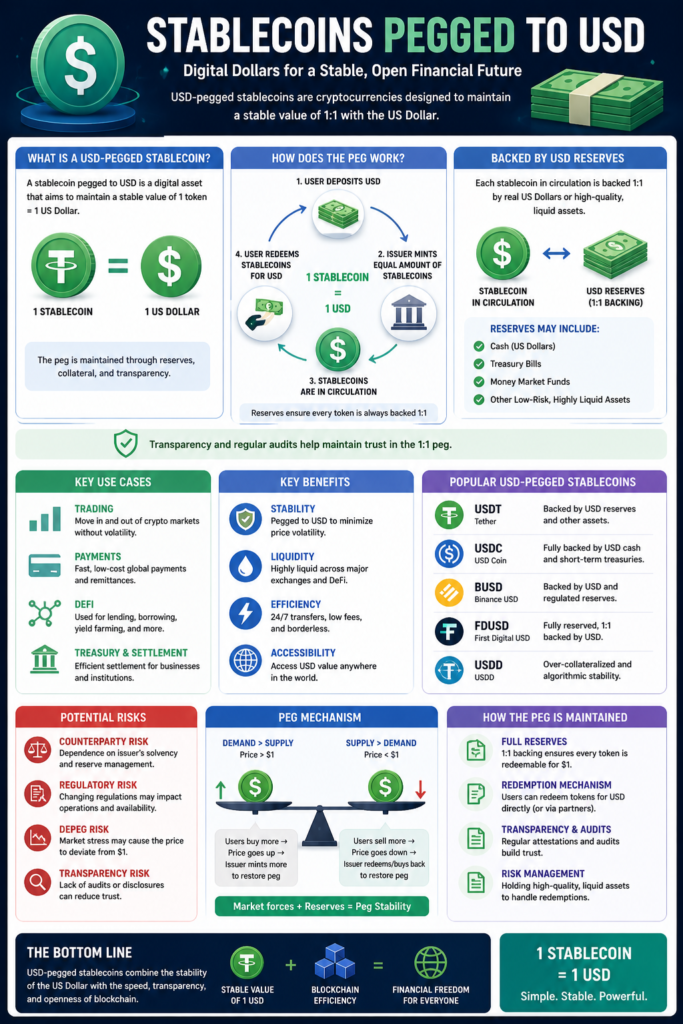
A stablecoin is a cryptocurrency designed to maintain a stable price by being pegged to another asset, most commonly the US dollar.
Unlike many cryptocurrencies that experience large price swings, stablecoins aim to keep their value consistent.
For example, one unit of a stablecoin may always aim to remain close to 1 USD.
Some of the most well-known stablecoins include:
Tether
USD Coin
DAI
These stablecoins are widely used across cryptocurrency exchanges and decentralized finance platforms.
Why stable digital currency Are Important in Crypto
Stablecoins play a crucial role in the cryptocurrency ecosystem for several reasons.
Reducing Volatility
Since stablecoins are pegged to stable assets like the US dollar, they provide a way for traders to avoid sudden price fluctuations.
Trading Pairs on Exchanges
Many cryptocurrency exchanges use stablecoins as trading pairs.
For example, traders often exchange assets like Bitcoin or Ethereum with stablecoins to protect profits during market volatility.
DeFi Applications
Stablecoins are heavily used in decentralized finance platforms for:
lending
borrowing
staking
liquidity pools
Market tracking platforms like CoinMarketCap list many stablecoins used across DeFi ecosystems.
Types of stable crypto asset
There are different types of stablecoins depending on how they maintain price stability.
Fiat-Backed stable digital currency
These stablecoins are backed by real-world currencies like the US dollar stored in reserves.
Examples include USDT and USDC.
Crypto-Backed stable digital currency
These stablecoins are backed by other cryptocurrencies instead of fiat currency.
DAI is a popular example.
Algorithmic stable digital currency
Algorithmic stablecoins use smart contracts and algorithms to control supply and demand in order to maintain price stability.
However, some algorithmic stablecoins have failed in the past due to market instability.
Advantages of Stablecoins
Stablecoins offer several advantages for crypto users.
Fast Transactions
Stablecoins allow users to send digital money quickly across borders.
Lower Transaction Costs
Transactions using stablecoins are often cheaper than traditional banking transfers.
Easy Access to Crypto Markets
Stablecoins make it easier for beginners to enter the crypto market without dealing with high volatility.
Educational resources from Binance Academy explain how stablecoins are used in trading and DeFi platforms.
Risks of Stablecoins
Although stablecoins provide stability, they still come with certain risks.
Regulatory Risks
Governments around the world are developing regulations for stablecoins.
Reserve Transparency
Some stablecoins have faced criticism regarding whether they actually hold enough reserves.
Smart Contract Risks
Crypto-backed and algorithmic stablecoins rely on smart contracts, which may contain vulnerabilities.
Also Read
Stablecoins are widely used for trading and payments. Before diving deeper, read our guide on What Is Cryptocurrency? to understand the foundation of digital assets.
Stablecoins run on blockchain networks. Learn how this technology works in our beginner-friendly guide on What Is Blockchain?.
Many of the world’s largest stablecoins, including USDT and USDC, operate on Ethereum. Read our complete guide on What Is Ethereum? to understand the ecosystem behind them.
Wondering where stablecoins are stored? Our guide on What Is a Crypto Wallet? explains how to securely hold and manage digital assets.
After understanding stablecoins, explore the future of decentralized finance in our complete guide to What Is DeFi?.
Also Read
Learn how stablecoins work and their role in the crypto ecosystem with this detailed guide from Binance Academy.
Explore the official educational resources from the Circle USDC website to understand how one of the world’s leading regulated stablecoins operates.
Read the official documentation on stablecoins and digital assets from the International Monetary Fund (IMF) to understand their benefits, risks, and global impact.
Conclusion
Stablecoins are an essential part of the cryptocurrency ecosystem. They provide price stability in a market known for extreme volatility. Traders, investors, and DeFi platforms rely heavily on stablecoins for transactions, liquidity, and risk management.
As cryptocurrency adoption continues to grow, stablecoins are likely to remain a key component of the global digital financial system.
FAQ
join our Telegram for instant crypto updates.
Subscribe to our youtube Channel
For detailed crypto market analysis, price predictions, and investment strategies,
subscribe to our YouTube channel Coin Alert

Dr. Khushwant Rana is the founder of Coin Alert and has 15+ years of business experience. He creates beginner-friendly crypto educational content focused on Bitcoin, blockchain, Web3, crypto security, and real-world crypto awareness in India.